
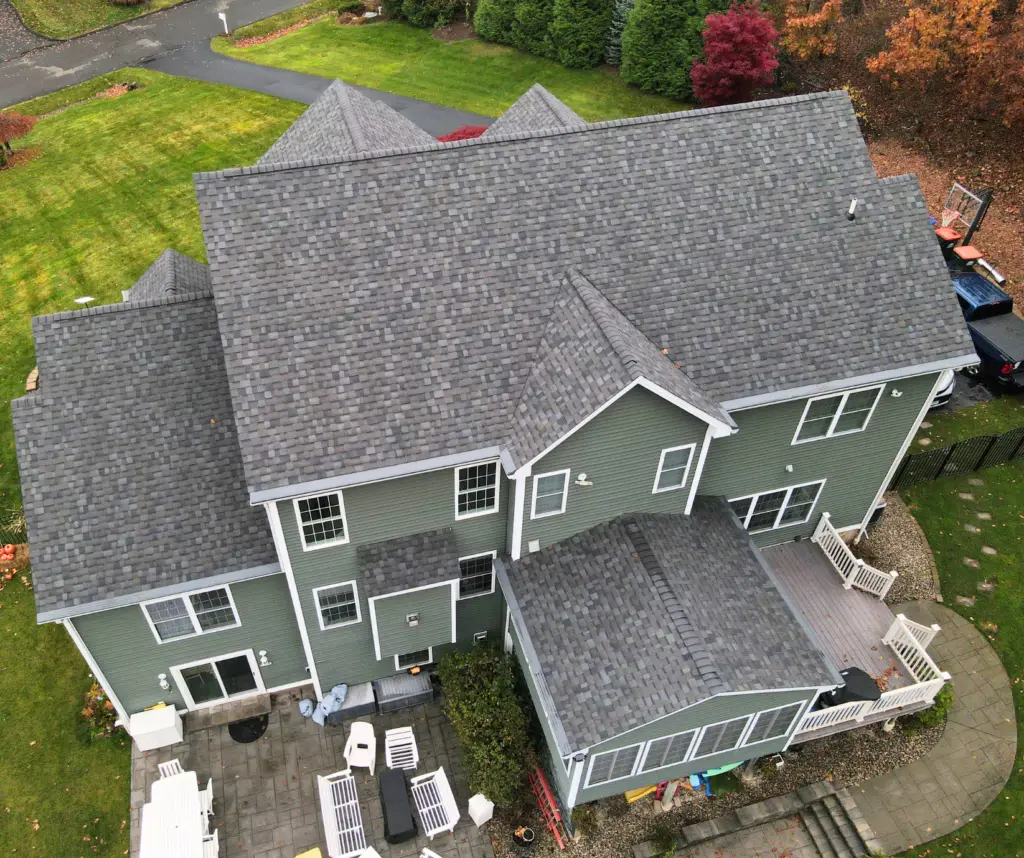
Home Battery Backup for Connecticut Homes
Keep the lights, the fridge, the well pump and the heat running when the grid goes down. We install FranklinWH home batteries with new solar or as an add-on to the solar you already have.
Call (860) 969-40062026 update: the 30 percent federal tax credit ended for homeowner-owned solar after December 31, 2025. Connecticut still pays you for 20 years through RRES. See every 2026 Connecticut solar incentive or compare cash, loan and lease over 25 years.
Key Facts
- CT home batteries average about $1,153 per kWh before incentives, or about $15,566 for 13.5 kWh (EnergySage, Jul 2026).
- One FranklinWH aPower 2 stores 15 kWh and delivers 10 kW continuous power.
- Connecticut's Energy Storage Solutions program pays $30 per kWh to enroll, or $130 per kWh on grid edge circuits, plus $300 per kW each year for 10 years, up to $550 for low-income and underserved customers.
- The federal 25D credit ended for batteries installed after December 31, 2025.
- Batteries bought with solar are exempt from Connecticut sales tax.
A home battery stores solar power or grid power and runs your house during an outage. One FranklinWH aPower 2 battery averages about $17,655 installed before incentives on the EnergySage marketplace, and the state's Energy Storage Solutions program pays you to share it with the grid for 10 years.
Why Connecticut Homeowners Add a Battery
- Backup power through nor'easters, ice storms and summer outages.
- Silent operation with no fuel, no exhaust and no generator service.
- Ongoing payments from the Energy Storage Solutions program.
- More value from every kilowatt-hour your solar panels make.
FranklinWH aPower 2 Specifications
| Specification | FranklinWH aPower 2 |
|---|---|
| Usable capacity | 15 kWh per unit, expandable to 15 units |
| Continuous power | 10 kW |
| Peak power | 15 kW for 10 seconds |
| Motor starting current | 185 A, enough to start a 5-ton central air unit |
| Chemistry | Lithium iron phosphate (LFP) |
| Safety listing | UL 9540 and UL 9540A |
| Warranty | 15 years or 60 MWh of throughput |
| Operating range | -4°F to 131°F |
FranklinWH says one aPower 2 powers an entire home. Real coverage depends on your loads. Electric heat, a well pump and central air draw more than a gas-heated home. We size the system from your bills and the circuits you want backed up.
What a Home Battery Costs in Connecticut
| Measure | Price before incentives |
|---|---|
| Connecticut average | $1,153 per kWh (EnergySage, H1 2026) |
| 13.5 kWh battery in CT | About $15,566 |
| One FranklinWH aPower 2 (15 kWh) | About $17,655 installed (EnergySage review, May 2026) |
| Two aPower 2 units (30 kWh) | About $35,300 installed |
Connecticut Battery Incentives in 2026
Since April 1, 2026, new homes enrolling in the Energy Storage Solutions program get an enrollment incentive of $30 per kWh, or $130 per kWh on grid edge circuits that suffer the worst storm outages. Each year for 10 years, the program also pays $300 per kW, up to $550 for low-income and underserved customers, for the power your battery delivers during peak events. Read the full Energy Storage Solutions guide.
The federal 25D residential credit no longer applies to batteries installed after December 31, 2025. Batteries bought with a solar system are exempt from Connecticut sales tax, and the Smart-E loan covers batteries. For a battery added to existing solar, confirm sales tax treatment with the Department of Revenue Services.
Adding a Battery to Your Existing Solar
You do not need new panels to add backup. We add FranklinWH batteries to most existing solar systems. We check your inverter, your main panel and your utility agreement first, then file the Energy Storage Solutions application for you.
Battery vs Generator
| Home battery | Standby generator | |
|---|---|---|
| Fuel | Solar or grid power | Natural gas or propane |
| Noise | About 30 dBA, near silent | Loud while running |
| Earns money | Yes, through Energy Storage Solutions | No |
| Maintenance | Little to none | Regular engine service |
| Long outages | Recharges from solar panels on sunny days | Runs as long as fuel lasts |
What Homeowners Say
Rated 4.9 on Google from 81 reviews, 4.9 on EnergySage from 31 reviews and 4.5 on SolarReviews from 39 reviews.
I recently had a Franklin 13.6 kWh add-on battery installed to complement my existing solar system. After receiving quotes from four different installers, I found Premier to be significantly more affordable than the rest.
I recently had Premier Improvements install solar panels and a battery storage system at my home, and I couldn’t be happier with the whole experience. The team was also there for all the necessary city and UI inspections, which made everything smooth and stress-free.
Premiere Improvements installed a Whole Home Solar Panel system as well as a whole home battery backup. All were excellent to work with, very responsive and very thorough.
Frequently Asked Questions
How much does a home battery cost in Connecticut?
EnergySage reports Connecticut batteries average $1,153 per kWh before incentives in 2026, about $15,566 for 13.5 kWh. One 15 kWh FranklinWH aPower 2 averages about $17,655 installed.
Is there a federal tax credit for home batteries in 2026?
Not for batteries you buy. The federal 25D residential clean energy credit ended for systems installed after December 31, 2025. Connecticut incentives still apply.
How long will a battery run my house?
It depends on what you power. As a rough estimate, a 15 kWh battery runs a refrigerator, lights, internet and a furnace blower for about a day. Central air and electric heat drain it faster. Solar recharges it each sunny day.
Will a battery work with my existing solar?
Usually yes. We add FranklinWH batteries to most existing systems after checking the inverter and electrical panel.
How much does Connecticut pay for a home battery?
Since April 1, 2026, Energy Storage Solutions pays $30 per kWh to enroll, or $130 per kWh on grid edge circuits, plus $300 per kW each year for 10 years, up to $550 for low-income and underserved customers.
Sources
- FranklinWH aPower 2 datasheet
- FranklinWH aPower 2 product page
- EnergySage: FranklinWH aPower review (May 2026)
- EnergySage: Energy storage cost by state (Jul 2026)
- CT Green Bank: Energy Storage Solutions updates for 2026
- IRS: Residential clean energy credit changes (FS-2025-05)
- CT DRS: Sales tax exemption for solar systems
Last reviewed October 2026 by Adam H. Cooke, Premier Improvements.
Call Now and Get Your Estimate.
Roofing, siding, windows, solar and batteries from one Connecticut team. Schedule your free consultation today.